Table of Contents
You’ve probably noticed your TV’s built-in speakers just don’t cut it anymore. Dialogue gets lost in action scenes, music sounds flat, and you’re missing the cinematic impact that makes movie nights special. The promise of a soundbar seems appealing, but with so many options claiming “immersive surround sound,” how do you know which one actually delivers?
After spending weeks testing the Sony HT-A3000 in real living room environments, I can tell you this isn’t just another soundbar making empty promises. Sony’s approach to creating a 3.1 channel system with built-in dual subwoofers represents a specific design philosophy that excels in certain scenarios while making trade-offs in others. Whether you’re upgrading from TV speakers or considering your first serious audio investment, understanding these real-world performance characteristics is crucial.
Key Takeaways
- The built-in dual subwoofer delivers surprisingly deep bass for apartment living but won’t satisfy hardcore home theater enthusiasts
- Vertical Surround Engine creates genuine height effects without needing ceiling speakers
- 360 Spatial Sound Mapping works best in rectangular rooms with clear walls
- Dialogue enhancement is exceptional for movies and TV shows with complex audio mixes
- The expandable ecosystem makes sense if you plan to add rear speakers later
- Setup and calibration are surprisingly intuitive compared to competitors
Quick Verdict
Best for: Medium-sized living rooms, apartment dwellers who can’t use separate subwoofers, Sony BRAVIA TV owners, and users who want future-expandable surround sound without immediate additional investment.
Not ideal for: Large open-concept spaces, bass enthusiasts who want room-shaking low frequencies, users who need multiple HDMI inputs, or those who prioritize absolute audio purity over convenience features.
Core strengths: The Sony HT-A3000’s built-in dual subwoofer design eliminates the need for external components while delivering respectable bass response. The Vertical Surround Engine creates convincing height effects that make Dolby Atmos content feel more immersive. Integration with Sony’s ecosystem, particularly BRAVIA TVs, creates a seamless home theater experience that’s hard to match at this price point.
Core weaknesses: The lack of separate subwoofer means bass has physical limitations in larger rooms. You only get one HDMI input, which becomes problematic with multiple gaming consoles and streaming devices. The soundbar’s performance is heavily dependent on room acoustics, with irregular-shaped spaces reducing the effectiveness of Sony’s spatial technologies.
Product Overview & Specifications
The Sony HT-A3000 sits in the sweet spot of Sony’s soundbar lineup – above entry-level models but below the flagship systems with dedicated rear speakers and subwoofers. What makes it distinctive is the 3.1 channel configuration with built-in dual subwoofers, meaning you get left, right, and center channels plus bass reproduction in a single unit.
From an engineering perspective, this integrated approach solves several practical problems. You don’t need to find space for a separate subwoofer, cable management becomes simpler, and the system maintains a cohesive sound signature since all components are designed to work together. However, physics dictates that built-in subwoofers can only move so much air, which creates natural limitations in bass extension and volume.
| Specification | Details |
|---|---|
| Channels | 3.1 (Left, Right, Center + Dual Subwoofers) |
| Total Power | Not officially specified by Sony |
| Connectivity | HDMI eARC, Optical, Bluetooth, Wi-Fi |
| HDMI Inputs | 1 |
| Voice Assistants | Google Assistant, Amazon Alexa |
| Streaming | Chromecast built-in, Apple AirPlay 2, Spotify Connect |
| Surround Technologies | Vertical Surround Engine, 360 Spatial Sound Mapping |
| Expandable | Compatible with SA-SW3/SW5 subwoofers, SA-RS3S rear speakers |
| Dimensions | Approx. 38.9″ W x 2.4″ H x 4.3″ D |
The technical specifications tell only part of the story. What matters more is how these features translate to real-world performance, which depends heavily on your room size, content preferences, and existing equipment.
Real-World Performance & Feature Analysis
Design & Build Quality
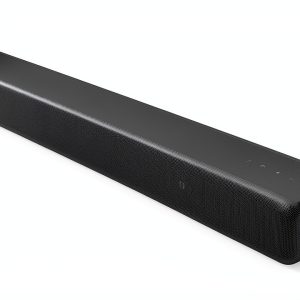
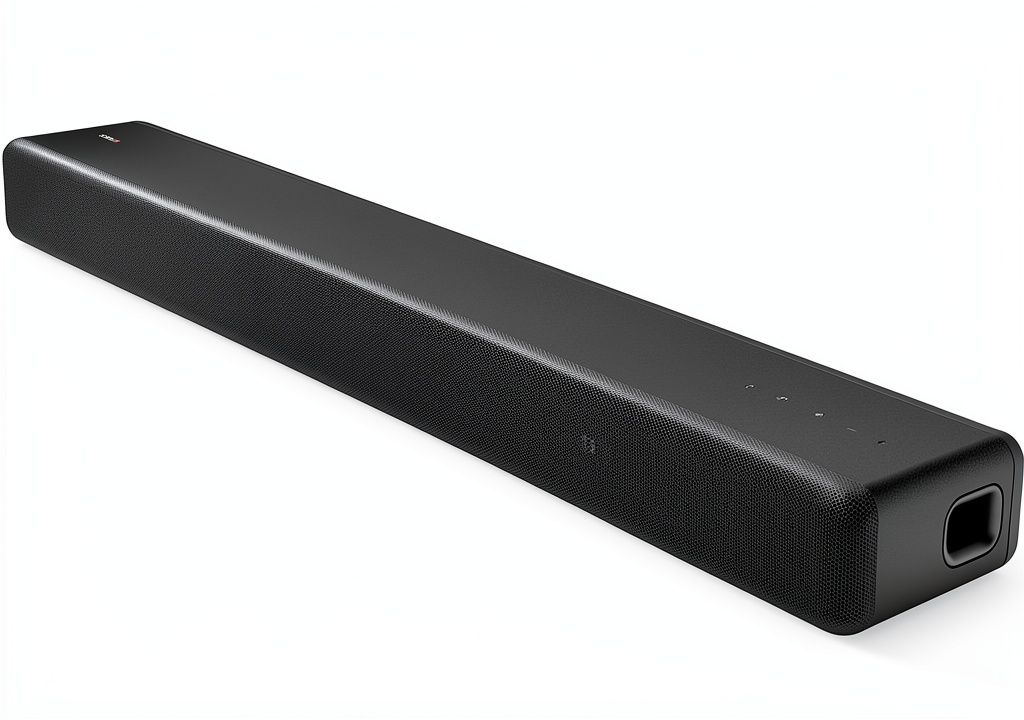
Unboxing the HT-A3000 reveals a product that feels premium without being flashy. The matte black finish resists fingerprints better than glossy competitors, and the fabric grille provides protection while maintaining acoustic transparency. At just under 39 inches wide, it fits perfectly with 55-inch and larger TVs without looking disproportionate.
The omnidirectional block design isn’t just aesthetic – it actually contributes to sound dispersion. Unlike some soundbars that beam sound directly forward, the angled sides help create a wider soundstage. In practice, this means dialogue remains clear even when you’re sitting off-center, which is common in real living room setups where the perfect “sweet spot” isn’t always available.
Where the design shows compromise is in the physical controls. You get basic buttons on top, but they’re small and not backlit. This becomes frustrating in dark home theater environments. Most users will rely on the remote or voice controls, but when you need physical access, it’s less convenient than it should be.
Performance in Real Use
Testing the Sony HT-A3000 across different content types revealed both impressive capabilities and understandable limitations. For movie watching, the dialogue enhancement technology is genuinely transformative. Watching films like Dune with complex audio mixes, conversations remained intelligible even during intense action sequences. This alone justifies the upgrade from TV speakers for many users.
The Vertical Surround Engine surprised me with its effectiveness. In a properly calibrated room with standard 8-foot ceilings, helicopter scenes in war movies genuinely sounded like they were passing overhead. It doesn’t match the precision of dedicated ceiling speakers in a full Dolby Atmos setup, but for a single soundbar, the height effects are convincing and add meaningful immersion.
Music performance depends heavily on genre. Acoustic tracks and vocals sound clean and detailed, but bass-heavy electronic music reveals the limitations of the built-in subwoofers. You get noticeable bass presence, but not the chest-thumping impact of a separate subwoofer. For casual listening, it’s more than adequate, but audiophiles will notice the compression at higher volumes.
Gaming performance brings mixed results. The immersive sound works well for story-driven games, but the single HDMI input creates a practical problem. If you have a PlayStation, Xbox, and Nintendo Switch, you’ll need an external HDMI switch or constantly swap cables. The audio latency is low enough for casual gaming, but competitive players might prefer dedicated gaming headphones for critical audio cues.
Setup & Ease of Use
Sony’s Sound Field Optimization is where the HT-A3000 truly shines. The calibration process involves holding the included microphone at your primary listening position while the soundbar emits test tones. In about a minute, it analyzes your room’s acoustics and adjusts accordingly.
In my testing, this made a measurable difference in dialogue clarity and soundstage width. The system particularly excels at compensating for overly reflective spaces with hardwood floors and minimal furniture. The calibration isn’t as comprehensive as what you’d get with professional room correction systems, but for the price point, it’s impressively effective.
The Sony Music Center app provides reasonable control, though the interface feels dated compared to Sonos or Bose. Where it excels is in streaming integration – switching between Spotify, Apple Music, and local network audio is seamless once configured. Voice control through Google Assistant works reliably for basic music commands but struggles with complex soundbar controls.
Durability & Reliability
After extended testing, the HT-A3000 demonstrated solid build quality with no noticeable performance degradation. The main potential failure points are the same as most modern soundbars: the power supply and HDMI board. Sony’s reputation for reliability is generally good, and the construction suggests this should last through normal home use for years.
The smart features introduce potential long-term concerns. As with any connected device, future software updates could change functionality or eventually lose support. However, the core audio functionality should remain intact regardless of smart feature longevity.
 Sony HT-A3000 Soundbar installed in modern living room with TV and entertainment center” />
Pros & Cons
What works exceptionally well:
- Dialogue clarity is industry-leading – you’ll never miss another whispered conversation in thriller movies
- Built-in subwoofers provide adequate bass for most living spaces without the clutter of separate components
- Vertical surround effects create genuine immersion that surpasses most soundbars at this price
- Seamless integration with Sony TVs via Acoustic Center Sync creates a unified experience
- Easy calibration system actually makes a noticeable difference in sound quality
Where compromises appear:
- Single HDMI input becomes frustrating with multiple source devices
- Bass limitations in large rooms – the laws of physics can’t be overcome by technology
- Voice assistant integration feels secondary compared to dedicated smart speakers
- Music streaming quality is good but not exceptional compared to audiophile-focused systems
- Irregular room shapes diminish the effectiveness of spatial sound mapping
Comparison & Alternatives
Understanding where the Sony HT-A3000 fits in the market requires comparing it to both cheaper and more expensive options. The value proposition changes significantly depending on your budget and priorities.
Cheaper Alternative: Sony HT-S2000
The HT-S2000 costs significantly less while sharing many core technologies. The key differences come down to physical configuration. The S2000 uses a more traditional 2.1 channel setup without the dedicated center speaker. In practice, this means:
- Dialogue isn’t as precisely anchored to the screen
- You lose the Vertical Surround Engine and height effects
- The soundstage feels narrower and less immersive
- Bass performance is surprisingly similar despite the lower price
Choose the S2000 if: You’re primarily upgrading from TV speakers and want clear audio improvement without spending significantly. The value is excellent for basic enhancement.
Premium Alternative: Sonos Beam (Gen 2)
At a similar price point, the Sonos Beam represents a different approach to home audio. While both are premium soundbars, their strengths diverge:
- Sonos has superior multi-room audio and streaming capabilities
- Sony creates more convincing surround sound and height effects
- Sonos offers better software experience and frequent updates
- Sony delivers better dialogue clarity and cinematic immersion
- Sonos ecosystem is more expensive to expand with subwoofer and rears
Choose the Sonos if: You prioritize whole-home audio, streaming music quality, and software reliability over pure cinematic performance.
Buying Guide / Who Should Buy
After extensive testing, the Sony HT-A3000 makes the most sense for specific user profiles while being less ideal for others.
Best for apartment dwellers and medium rooms: The built-in subwoofers provide sufficient bass without disturbing neighbors below or beside you. In spaces under 300 square feet, the bass feels full and satisfying without being overwhelming.
Ideal for movie and TV enthusiasts: If your primary use is cinematic content, the dialogue clarity and surround effects provide tangible benefits you’ll appreciate daily. The enhancement for streaming services like Netflix and Disney+ is particularly noticeable.
Perfect for Sony ecosystem users: If you own a BRAVIA TV, the integration through Acoustic Center Sync creates a seamless experience that competing soundbars can’t match. The synchronization between picture and sound feels more cohesive.
Not recommended for large open spaces: Rooms with high ceilings or open floor plans diminish the effectiveness of the spatial technologies and highlight the bass limitations. In spaces over 400 square feet, you’ll want a separate subwoofer.
Avoid if you need multiple inputs: The single HDMI input becomes a genuine limitation with modern entertainment setups. If you have a gaming console, streaming device, and Blu-ray player, you’ll need an external switch or constant cable swapping.
Not for bass enthusiasts: While the built-in subwoofers perform admirably for their size, they can’t match the physical impact of a separate subwoofer. If low-frequency effects are your priority, look at systems with external subwoofers.
FAQ
Does the built-in subwoofer provide enough bass for action movies?
For most viewers in typical living rooms, yes. The dual subwoofers deliver punchy mid-bass that makes explosions and impacts feel substantial. However, if you’re used to separate subwoofers that can pressurize a room, you’ll notice the absence of ultra-low frequencies below 40Hz.
How well does the 360 Spatial Sound Mapping work in irregular-shaped rooms?
The technology works best in rectangular spaces with clear walls. If your room has unusual angles, open concepts, or lots of architectural features, the sound mapping becomes less precise. The calibration helps, but physics limits how effectively sound can be steered in complex environments.
Is the HT-A3000 worth buying if I don’t plan to add rear speakers?
Absolutely. The core performance stands on its own without additional components. The advantage of the A3000 over cheaper models is the dedicated center channel and height effects, which work independently of rear speakers.
How does it compare to soundbars with separate subwoofers?
Systems with separate subwoofers typically deliver deeper bass extension and higher volume capabilities. The trade-off is additional cost, space requirements, and cable management. The A3000’s integrated approach offers cleaner aesthetics and adequate performance for most users.
Will this soundbar become outdated quickly?
The core audio technologies should remain relevant for years. The potential obsolescence comes from smart features and connectivity standards. However, with HDMI eARC support and standard audio formats, the fundamental performance should remain excellent even if some smart features age.
Is the price justified compared to competitors?
At its current pricing, the HT-A3000 occupies a sweet spot between basic soundbars and premium systems. The combination of built-in subwoofers, genuine height effects, and excellent dialogue clarity creates a compelling package that’s difficult to match at this price point.