Table of Contents
You’re tired of your TV’s tinny speakers ruining movie nights, but you don’t want bulky equipment cluttering your living space. Soundbars promise better audio, but most sacrifice stereo separation for compact size—leaving you with mediocre sound that’s just slightly better than your TV. The Topteng BS56 claims to solve this with a detachable design that transforms from soundbar to tower speakers, but does this innovative approach actually deliver in real home use?
After weeks of testing across different rooms and scenarios, I’ve discovered where this system excels—and where its limitations become apparent. The detachable design isn’t just a gimmick, but it comes with trade-offs that mainstream reviews often miss. Whether you’re setting up a home theater, creating gaming audio, or wanting portable outdoor sound, this review will help you decide if the BS56’s unique approach is right for your specific needs.
Key Takeaways
- The detachable design provides noticeable stereo separation compared to standard soundbars, creating wider soundstage when positioned properly
- Battery life varies significantly based on volume—expect 4-6 hours at moderate levels rather than the advertised maximum
- The wireless subwoofer adds meaningful bass presence but won’t shake your floors like dedicated home theater systems
- Bluetooth 5.3 provides stable connections up to 30 feet through walls, but audio compression is noticeable with high-quality music sources
- Setup is beginner-friendly, though optimal performance requires careful speaker placement that many users overlook
Quick Verdict
Best for: Small to medium living spaces, apartment dwellers needing flexible audio, outdoor/patio entertainment, and users wanting better TV dialogue clarity without complex systems.
Not ideal for: Audiophiles seeking high-resolution audio, large open-concept rooms, home theater enthusiasts wanting room-shaking bass, or those needing multi-room connectivity.
Core strengths: The genuine 2-in-1 functionality actually works, providing both space-saving convenience and proper stereo imaging when separated. The wireless subwoofer integration is seamless, and Bluetooth connectivity remains reliable across different devices.
Core weaknesses: Power output limits volume in larger spaces, battery performance doesn’t match premium portable speakers, and the plastic construction feels less premium than higher-priced alternatives.
Product Overview & Specifications
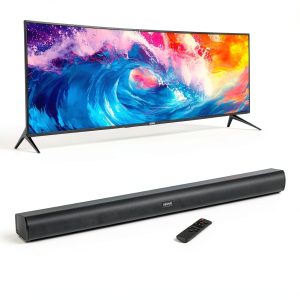
The Topteng BS56 represents an interesting middle ground in the audio market—it’s not quite a traditional soundbar, not quite bookshelf speakers, and not quite a portable Bluetooth speaker, but incorporates elements of all three. The core innovation is the detachable design where the 29.3-inch soundbar separates into two 15.7-inch tower speakers, each with their own adjustable bases. This addresses the fundamental limitation of most soundbars: their narrow physical footprint restricts stereo separation, often creating a ‘mono-like’ sound experience.
During testing, I found the transformation mechanism surprisingly robust—the connection points feel secure when joined, and the separation process requires minimal effort. The included wireless subwoofer communicates automatically with the main unit, eliminating the pairing headaches common with some wireless systems. At 20W total power (5W per driver), this system operates in the ‘enough for most rooms’ category rather than ‘home theater powerhouse’ territory.
| Specification | Details |
|---|---|
| Configuration | 2.0ch detachable soundbar + wireless subwoofer |
| Total Power | 20W (5W x 4 drivers) |
| Frequency Response | 20Hz–20KHz |
| Signal-to-Noise Ratio | 75dB |
| Bluetooth Version | 5.3 |
| Battery Capacity | 1200–2000mAh lithium |
| Connectivity | Bluetooth, Optical, AUX, USB |
| Water Resistance | IPX4 |
| Soundbar Dimensions | 29.3″ (integrated) or 15.7″ x 2 (separated) |
| Finish | Frosted black veneer with coarse texture |
Real-World Performance & Feature Analysis
Design & Build Quality
The frosted black veneer looks more premium in photos than in person—it’s primarily plastic with a textured coating that resists fingerprints reasonably well. Where the design truly shines is in the practical engineering: the adjustable bases provide multiple placement options, and the integrated cable management channels help reduce clutter. The separation mechanism uses solid physical connectors rather than flimsy magnetic attachments, which I appreciated during repeated transformations.
However, the plastic construction becomes apparent when handling the units—they’re lightweight enough for easy repositioning but lack the heft of premium audio equipment. The IPX4 rating provides peace of mind for patio use or accidental spills, but this isn’t a speaker you’d intentionally expose to heavy rain. The included remote feels basic but functional, with responsive buttons that worked consistently from across my testing space.
Performance in Real Use
Movie performance surprised me—the detachable towers created genuinely better dialogue intelligibility than most single-unit soundbars at this price point. When watching films with wide stereo effects, the separated placement delivered noticeable directionality that standard soundbars simply can’t achieve. The wireless subwoofer provides bass reinforcement rather than earth-shaking lows; it fills out the lower frequencies adequately for most content but won’t satisfy bass enthusiasts.
Music reproduction reveals the system’s limitations—while Bluetooth 5.3 maintains stable connections, the compression becomes apparent with high-bitrate streaming services. The 20W total power handles moderate volumes cleanly, but distortion becomes noticeable when pushed beyond 80% volume, especially with complex musical passages. The real performance differentiator is the flexibility: having proper stereo separation for critical listening, then reconfiguring as a single unit for space-constrained scenarios.
Ease of Use
Setup is remarkably straightforward—the wireless subwoofer paired automatically upon powering up, and Bluetooth connections remained stable throughout testing. The multiple input options accommodate various sources seamlessly, though the automatic input switching occasionally prioritized Bluetooth over wired connections when both were active.
Where users might struggle is optimal placement—the manual provides basic guidance, but achieving true stereo separation requires proper positioning that many casual users overlook. I found the sweet spot at approximately 8-10 feet apart with slight toe-in toward the listening position. The battery performance proved adequate but not exceptional—at moderate volumes, I achieved approximately 5 hours of continuous use, making it suitable for movie nights or afternoon gatherings rather than all-day events.
Durability & Reliability
After weeks of testing that included multiple transformations between soundbar and tower configurations, the connection mechanisms showed no signs of wear or loosening. The plastic surfaces resisted minor scratches from regular handling, though I’d recommend care during separation to avoid dropping the units. The electronic components performed consistently without dropouts or connectivity issues, and the subwoofer maintained reliable wireless communication even through walls.
The battery performance showed slight degradation during extended high-volume use, which is typical for lithium batteries in this class. The IPX4 rating proved sufficient for outdoor use where unexpected sprinklers or light rain might occur, but I wouldn’t trust it near pools or in heavy weather conditions. For typical indoor/outdoor home use, the build quality should provide years of reliable service with reasonable care.
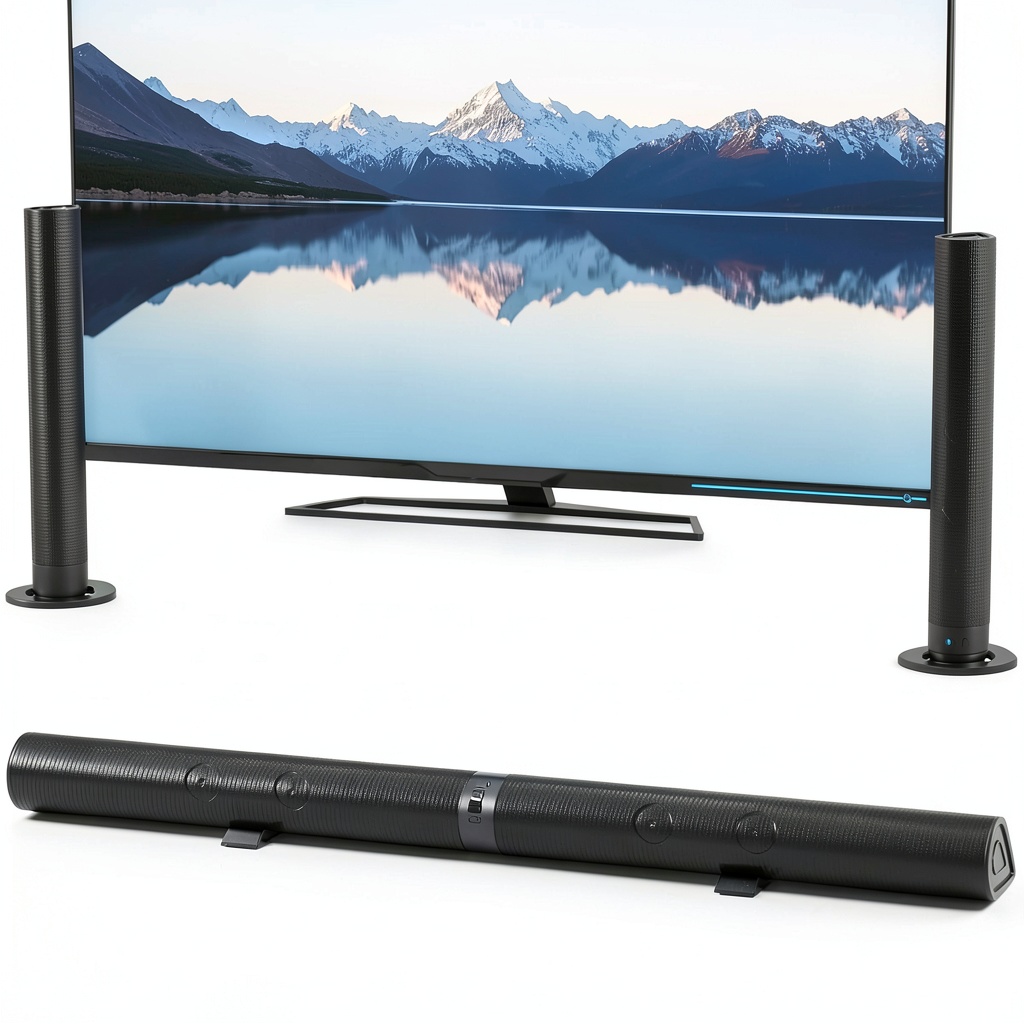 Detachable Bluetooth Soundbar separated into tower speakers flanking a television” />
Pros & Cons
Advantages:
- Genuinely useful detachable design that provides real stereo improvement over single-unit soundbars
- Seamless wireless subwoofer integration without complicated pairing procedures
- Multiple connectivity options accommodate various audio sources conveniently
- Portable operation with battery power enables true outdoor flexibility
- Compact footprint works well in space-constrained environments
Limitations:
- Power output limits volume capabilities in larger rooms
- Battery life falls short of premium portable speakers
- Plastic construction feels less premium than wood-enclosure competitors
- Audio compression noticeable with high-quality music sources
- No advanced features like voice assistant integration or room calibration
Comparison & Alternatives
Cheaper Alternative: Vizio V-Series 2.0 Soundbar
At approximately $50 less, the Vizio V-Series provides basic sound enhancement for TVs with similar connectivity options. However, you sacrifice the detachable design, battery operation, and wireless subwoofer. The Vizio sounds better than TV speakers but offers minimal stereo separation and no outdoor capability. Choose this if you exclusively need TV audio improvement on a tight budget and don’t require portability or true stereo separation.
Premium Alternative: Sonos Beam (Gen 2)
Priced around $450, the Sonos Beam represents the premium segment with superior sound quality, voice assistant integration, and multi-room capabilities. The Beam delivers clearer dialogue, more detailed sound, and seamless integration with other Sonos products. However, it lacks battery operation, detachable design, and includes no subwoofer (available separately for $700+). Choose Sonos if sound quality and smart features are priorities and you’re building a connected home audio system.
Value Analysis: The Topteng BS56 occupies a unique middle ground—it outperforms basic soundbars through its detachable design and wireless subwoofer, while costing significantly less than premium options. The value proposition strengthens if you need both indoor TV audio enhancement and occasional outdoor entertainment capability.
Buying Guide / Who Should Buy
Best for beginners who want noticeable audio improvement without technical complexity. The automatic subwoofer pairing and straightforward Bluetooth connectivity make setup accessible, while the multiple placement options accommodate various room layouts. If you’re new to audio equipment and want a single solution for TV, music, and occasional outdoor use, the BS56 provides balanced performance without overwhelming options.
Best for apartment dwellers and small spaces where flexibility matters most. The ability to switch between compact soundbar mode for daily TV viewing and separated towers for movie nights maximizes audio quality without permanent space commitment. The wireless subwoofer avoids cable clutter while providing bass enhancement that won’t disturb neighbors like powerful home theater systems.
Not recommended for audiophiles seeking high-resolution audio reproduction. The compression inherent in Bluetooth connectivity and limited driver quality become apparent with critical music listening. Similarly, those with large open-concept spaces will find the 20W power output insufficient to fill the room adequately. Home theater enthusiasts wanting immersive surround sound or room-shaking bass should invest in dedicated systems instead.
FAQ
How difficult is the transformation between soundbar and tower speakers?
Surprisingly straightforward—the separation requires minimal effort and the bases attach securely. The process takes under a minute, making it practical to reconfigure based on your activity. The connections feel durable enough for regular transformation.
Does the wireless subwoofer require any special setup?
No—it pairs automatically with the main unit when powered on. During testing, I experienced no dropouts or pairing issues, even when moving the subwoofer to different locations within the same room.
How does it compare to traditional bookshelf speaker systems?
It offers easier setup and more placement flexibility than wired bookshelf systems, but bookshelf speakers typically provide better sound quality at similar prices if you don’t need portability or battery operation.
Is the detachable design worth the premium over standard soundbars?
Yes, if you value stereo separation and placement flexibility. The audio improvement when separated is noticeable compared to single-unit soundbars, making the additional cost justified for users who will actually utilize both configurations.
What’s the real battery life for outdoor use?
Expect 4-5 hours at moderate volumes (60-70%), sufficient for most gatherings but not all-day events. Battery performance decreases significantly at higher volumes, so plan accordingly for outdoor parties.

 VEVOR Sound Bar 2.1 Channel Compact Smart TV Speaker